
Annual Infrared Inspections: A Critical Step for Electrical Safety and Reliability
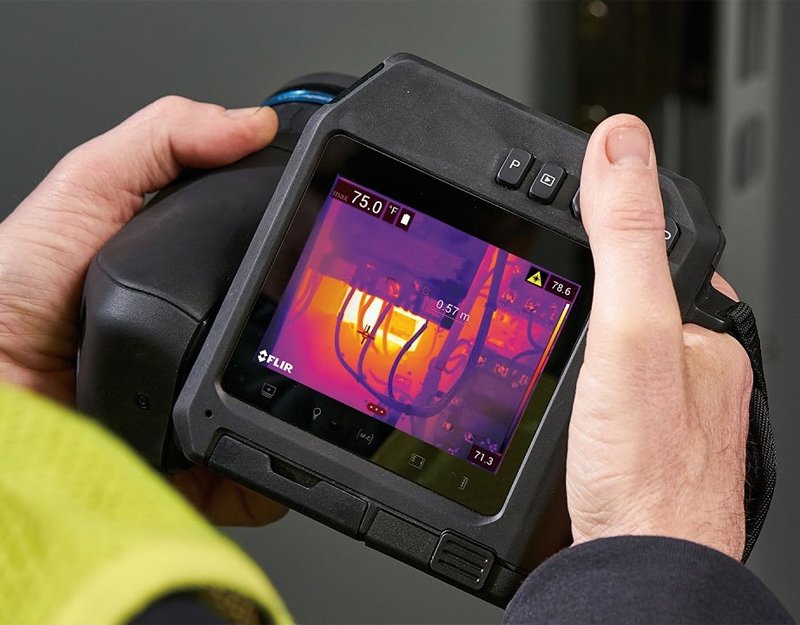
Annual Infrared Inspections: A Critical Step for Electrical Safety and Reliability In industrial and commercial facilities, electrical safety and reliability are essential. Unexpected equipment failures or downtime can disrupt operations, drive up costs, and put staff at risk. That’s why experts recommend performing at least one infrared (IR) inspection per year as part of a proactive maintenance program. At THERMOinspect, we specialize in industrial and commercial infrared inspections across Canada, helping manufacturers, property managers, and building owners detect problems before they become costly or dangerous. Why Schedule an Annual Infrared Inspection? Detect Hidden Electrical Issues: Electrical panels, switchgear, and transformers often develop loose connections or overloaded circuits. These problems generate abnormal heat signatures that only infrared thermography can detect. Adapt to Environmental & Operational Stress: Seasonal changes, dust accumulation, and fluctuating electrical loads accelerate equipment wear. An annual thermal scan ensures these evolving risks are identified early. Meet Compliance and Industry Standards: Organizations such as NFPA, ISO, and Infraspection Institute recommend regular thermographic inspections to support electrical maintenance standards and reduce liability. Key Benefits of Annual Infrared Inspections Prevent Equipment Failure – Identify overheating components before they lead to unplanned outages. Reduce Downtime Costs – Keep production lines, commercial operations, and tenants running smoothly. Extend Asset Life – Protect and preserve electrical infrastructure with proactive care. Improve Workplace Safety – Lower the risk of fire or arc flash incidents. Enable Predictive Maintenance – Build a yearly thermal record for data-driven decision-making. Trusted Partner for Electrical Thermography in Canada Choosing the right partner for IR inspections is critical. With industry expertise and advanced thermal imaging technology, THERMOinspect provides reliable, professional, and standards-compliant infrared inspection services for industrial plants, commercial buildings, and multi-unit facilities. Conclusion: Investing in one annual infrared inspection is a small step that delivers big returns in safety, reliability, and cost savings. Don’t wait for a failure to expose risks -schedule your industrial or commercial IR inspection today with THERMOinspect. Need infrared imaging services? Contact THERMOInspect for expert services with advanced laser and infrared diagnostic tools.
Predictive Maintenance: What It Is, Types, Cost Savings, and Insurance Benefits
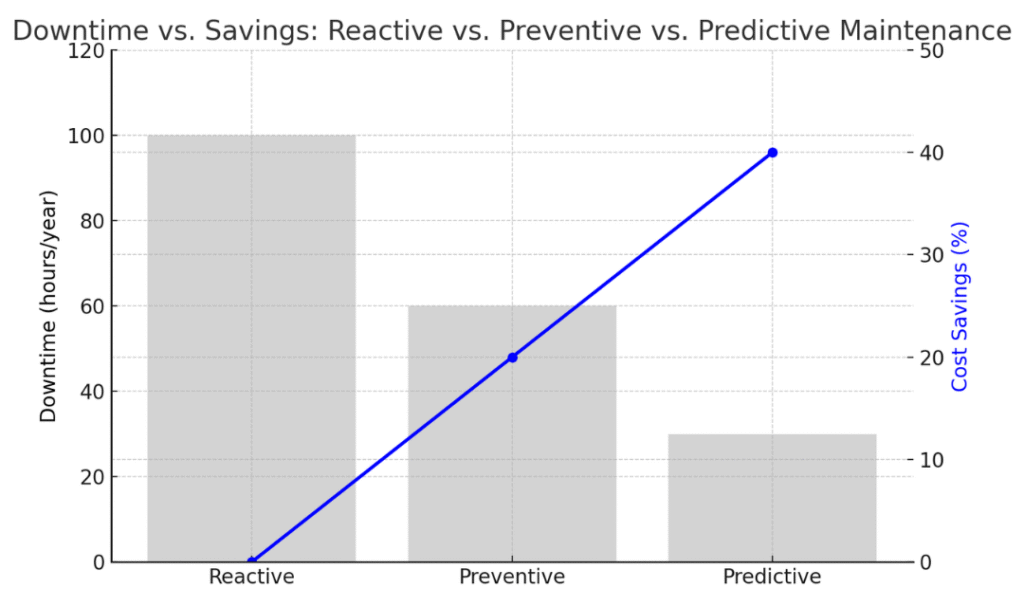
Predictive Maintenance: What It Is, Types, Cost Savings, and Insurance Benefits Discover what predictive maintenance (PdM) is, the main types of PdM technologies, how much PdM can save businesses, and why it’s critical for insurance companies to reduce risks and claims. Predictive Maintenance (PdM) is a data-driven maintenance strategy that uses sensors, condition monitoring, and analytics to detect equipment issues before they lead to failure. Unlike reactive maintenance (fixing after breakdowns) or preventive maintenance (scheduled servicing), PdM pinpoints the optimal time for intervention, lowering costs and extending asset life. By predicting failures in advance, PdM reduces downtime, improves safety, and minimizes unexpected repair expenses – making it a vital tool for industries and insurance companies alike. Types of Predictive Maintenance Technologies Different PdM techniques are applied depending on the type of equipment and industry. The most common include: Vibration Analysis – Identifies misalignment, imbalance, and bearing wear in motors, pumps, and rotating machinery. Infrared Thermography – Detects electrical and mechanical overheating before failure occurs. Ultrasonic Testing – Finds compressed air leaks, steam leaks, or electrical discharge using high-frequency sound waves. Oil Analysis – Monitors lubricant condition and contamination to detect internal wear. Acoustic Emission Monitoring – Identifies cracks, material defects, and stress wave activity. Electrical Testing – Detects insulation degradation, partial discharges, and other electrical failures. IoT & Machine Learning Sensors – Provide continuous real-time monitoring with AI-based predictions. How Much Can Predictive Maintenance Save? The financial benefits of PdM are well-documented. Industry data shows that organizations can achieve: 30–40% reduction in maintenance costs Up to 70% fewer breakdowns 20–25% higher equipment uptime Up to 10x ROI in some cases Real-World Predictive Maintenance Case Studies Automotive Manufacturing – Prevented a line shutdown using vibration monitoring, avoiding $250,000 per hour in downtime losses. Power Utilities – Infrared inspections identified overheating breakers, saving $2 million in outage costs in a single year. Oil & Gas Industry – PdM saved $4 for every $1 invested, preventing compressor failures. Hospitals – Predictive maintenance on HVAC and generators cut emergency repairs by 40%, protecting critical operations. Why Predictive Maintenance Matters to Insurance Companies Insurance companies benefit directly from PdM adoption because it reduces the frequency and severity of claims. Equipment failures often lead to fires, production stoppages, or costly damages – risks that PdM helps mitigate. Key insurance benefits include: Fewer claims and lower losses from equipment breakdowns or fire risks. More accurate risk assessments based on real-time asset health data. Improved compliance and safety for insured businesses. Lower premiums offered to clients with PdM programs in place. Some insurers report up to 40% fewer claims for clients using PdM tools like infrared thermography and vibration analysis. Conclusion: PdM as a Bridge Between Efficiency and Risk Management Predictive Maintenance is more than a maintenance strategy – it’s a business continuity and risk management tool. By detecting issues before they escalate, companies save money, extend asset life, and protect their workforce. For insurers, PdM represents a tangible way to reduce payouts, improve client safety, and encourage proactive risk management. In today’s competitive and risk-conscious environment, PdM is not just a best practice – it is becoming an industry standard. Need infrared imaging services? Contact THERMOInspect for expert services with advanced laser and infrared diagnostic tools.
Understanding Types and Benefits of Infrared Cameras
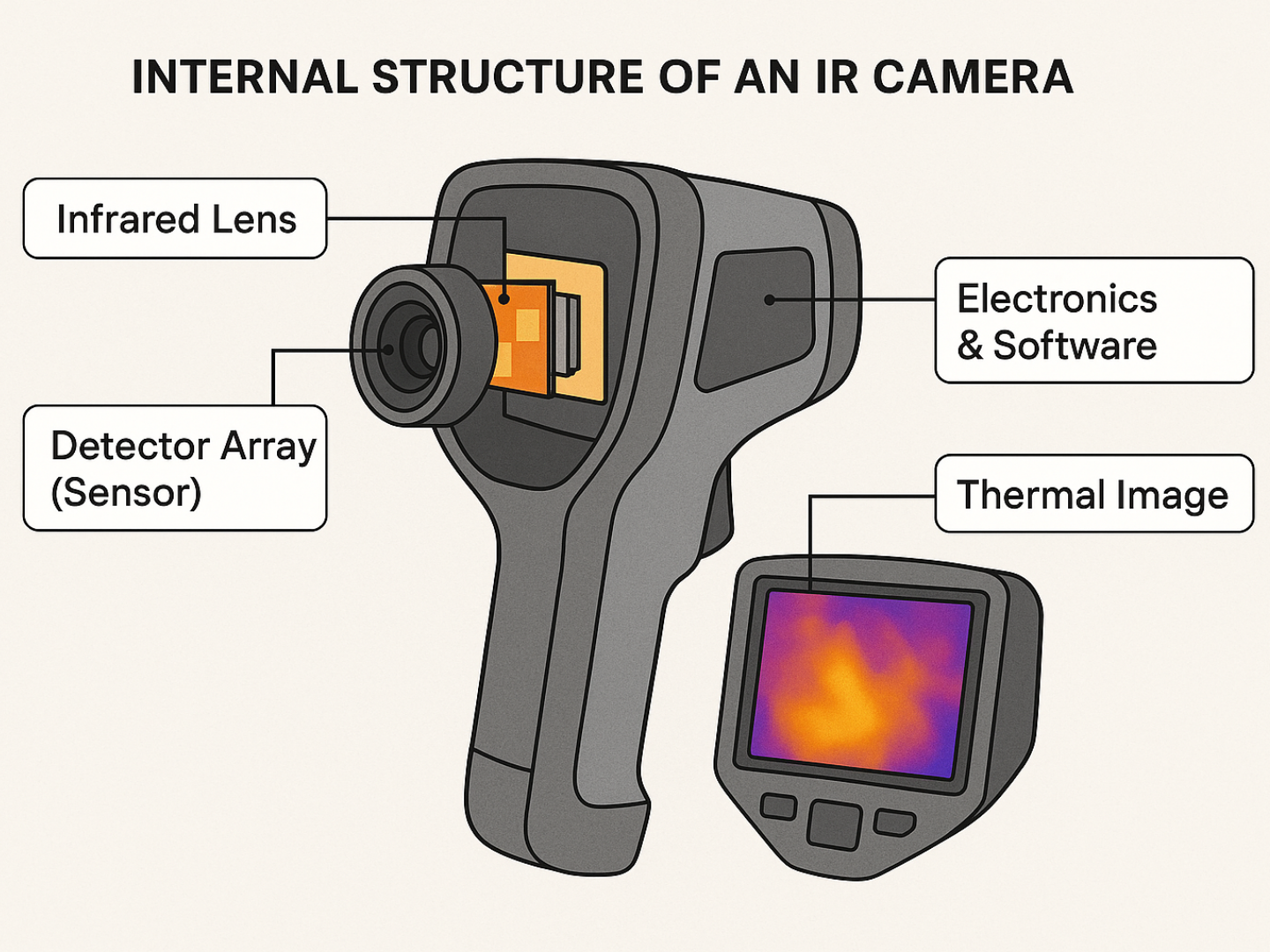
Understanding Infrared Cameras: How They Work, Types, and Benefits Infrared (IR) cameras are advanced imaging devices designed to detect and visualize heat energy – infrared radiation – emitted by objects. Unlike standard cameras that capture visible light, IR cameras translate temperature differences into a thermal image, allowing users to “see” heat patterns that are otherwise invisible to the human eye. An IR camera consists of three primary components: Infrared Lens – Focuses thermal energy onto the sensor. Detector Array (Sensor) – Made from specialized materials such as vanadium oxide (VOx) or indium antimonide (InSb) that convert infrared radiation into electronic signals. Electronics & Software – Process the signal and generate a color or grayscale thermal image, often with temperature data overlaid. Modern IR cameras also include features like high-resolution displays, Wi-Fi connectivity, and advanced analysis tools for precise measurement and reporting. Types of IR Cameras Infrared cameras are categorized based on their wavelength sensitivity and application: Long-Wave Infrared (LWIR) – 8 – 14 µm range, commonly used for electrical inspections, building diagnostics, and general industrial maintenance. Mid-Wave Infrared (MWIR) – 3 – 5 µm range, ideal for high-temperature applications such as furnace monitoring or aerospace testing. Short-Wave Infrared (SWIR) – 0.9 – 1.7 µm range, used in research, manufacturing, and specialized imaging tasks. They also vary by form factor, including handheld, fixed-mount, and drone-mounted units. Leading Brands in the Market Well-known manufacturers include FLIR Systems, Fluke, Testo, Keysight Technologies, and Optris, each offering models tailored to different industries, from electrical maintenance to scientific research. Key Benefits of Using IR Cameras Non-Contact Measurement – Enables safe inspection of energized equipment. Early Fault Detection – Identifies overheating, insulation failures, or fluid leaks before costly breakdowns occur. Energy Efficiency – Detects thermal losses in buildings and industrial processes. Versatility – Applicable in electrical, mechanical, building, and even medical diagnostics. In modern industry, infrared cameras have become indispensable tools for predictive maintenance, safety assurance, and quality control – empowering professionals to make informed, data-driven decisions. Need infrared imaging services? Contact THERMOInspect for expert services with advanced laser and infrared diagnostic tools.
Infrared Thermography Explained: How Thermal Cameras See and Measure Heat
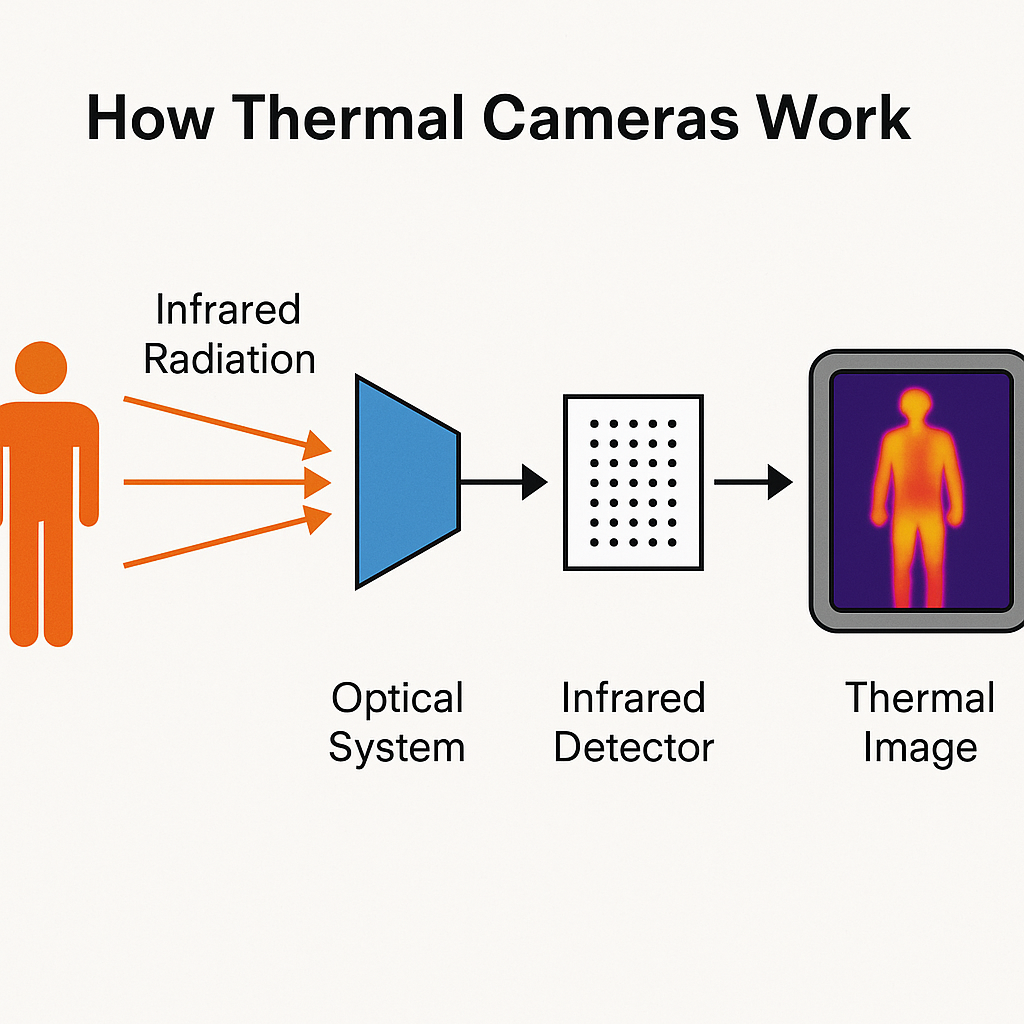
Unlocking the Invisible: A Technical Guide to How Thermal Cameras Work Thermal imaging is no longer confined to high-end research labs or military-grade surveillance. Today, this technology has become a cornerstone of industrial maintenance, energy audits, and predictive diagnostics. By converting invisible infrared (IR) radiation into visible, interpretable images, thermal cameras allow us to see heat—a capability with profound implications for safety, efficiency, and asset reliability. The Science Behind Thermal Imaging Every object above absolute zero (-273.15°C) emits infrared radiation proportional to its temperature. Thermal imaging devices capture this radiation and translate it into a visual representation called a thermogram. Unlike standard photography, which relies on reflected visible light, thermal imaging detects emitted energy, making it effective even in total darkness or through certain obscurants like smoke and light fog. Applications Across Industries Electrical Systems: Identify overloads, unbalanced phases, or impending breaker failures before catastrophic shutdowns. Mechanical Equipment:Detect abnormal bearing friction, misalignment, or lubrication failure. Building Performance: Locate insulation voids, HVAC inefficiencies, and air leaks to optimize energy usage. Safety & Security: Monitor high-risk areas, detect intruders by heat signature, and support emergency response in low-visibility conditions. Why Understanding Thermal Imaging Matters Knowing how a thermal imager works enhances the accuracy of inspections and the credibility of reports. Factors like emissivity, reflected temperature, and environmental conditions directly impact measurement quality. Skilled thermographers apply these principles to ensure reliable data interpretation and actionable results. Conclusion Thermal imaging turns invisible energy patterns into actionable insight. Whether you’re diagnosing an overheating motor, conducting an energy audit, or improving plant safety, understanding the mechanics of thermal cameras allows you to maximize their potential. As industries continue to shift toward predictive maintenance and energy efficiency, thermal imaging is no longer optional-it’s a critical tool in the modern diagnostic arsenal. Need thermal growth analysis or precision shaft alignment? Contact THERMOInspect for expert services with advanced laser and infrared diagnostic tools.
Understanding Thermal Growth and Its Impact on Shaft Alignment
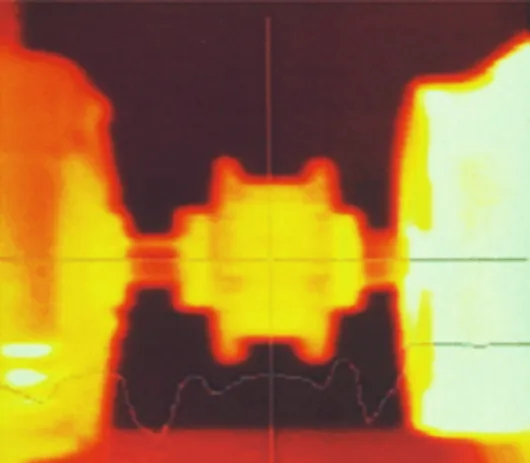
Understanding Thermal Growth and Its Impact on Shaft Alignment When machines heat up, they grow – and that growth can destroy shaft alignment if not accounted for. – The Science of Thermal Growth When rotating equipment operates under load, temperature changes cause the machine casing and shafts to expand. This thermal growth directly affects alignment between coupled machines. The magnitude of movement can be calculated using the standard formula: ΔL=L×C×ΔT {Delta L = L times C times Delta T} L: Vertical distance from shaft centerline to machine foot C: Coefficient of linear expansion (e.g., 0.0000059 in/°F for cast iron) ΔT: Temperature change (operating temp − ambient temp) Example: For a motor with a 26″ shaft-center height experiencing a 250°F rise: 26″×0.0000059×250°F≈0.038″26″ times 0.0000059 times 250°F approx 0.038″ That’s nearly 1 mm of vertical movement—enough to cause severe misalignment if left uncorrected. How Thermal Growth Affects Alignment Uniform Growth at Both Feet: Creates a vertical offset. Unequal Growth (Front vs Rear Feet): Produces angular misalignment, leading to coupling stress, bearing wear, and vibration issues. Practical Example:A motor aligned “cold” with its driven pump may look perfect during installation. Once the pump reaches operating temperature and one end rises more than the other, the shafts shift, resulting in coupling misalignment and premature wear. Corrective Approaches “Hot” Alignment (Cold Targets) Pre-adjust machines by adding shims or offsetting alignment values to compensate for predicted thermal growth. Once the machine heats, shafts settle into proper alignment. Live Thermal Monitoring Advanced laser systems (e.g., Easy-Laser, RotAlign Touch, Pruftechnik) measure live shaft movement during warm-up, allowing precise dynamic corrections. Use Built-In Calculations Many modern alignment tools integrate the ΔL = L × C × ΔT formula, applying thermal growth compensation automatically. Key Takeaways Thermal growth is a predictable, measurable factor in rotating machinery alignment. Even small movements can create significant coupling stress. Always account for ΔL = L × C × ΔT when aligning motors and pumps. Use cold targets or live monitoring to achieve operational alignment, not just installation alignment. Need thermal growth analysis or precision shaft alignment? Contact THERMOInspect for expert services with advanced laser and infrared diagnostic tools.
Unlock Safety, Efficiency & Reliability: Predictive Maintenance Powered by Infrared Thermography
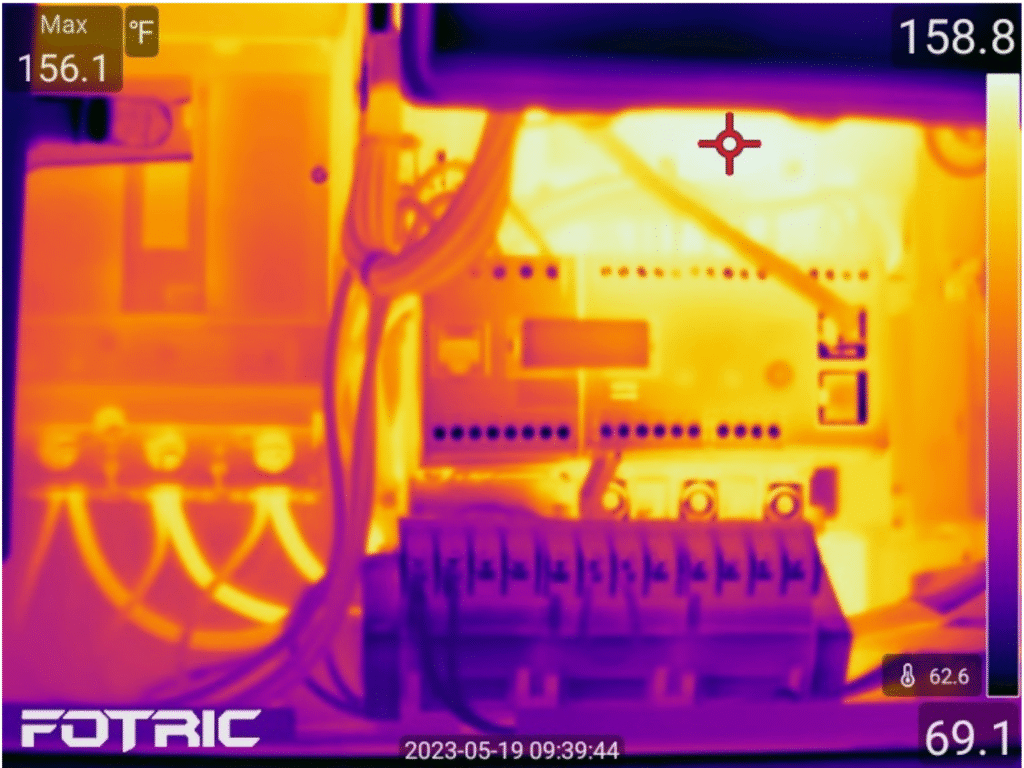
Unlocking Efficiency & Safety: The Power of Predictive Maintenance with Infrared Thermography In today’s competitive industrial landscape, downtime isn’t just inconvenient, it’s expensive. That’s why more facilities across Canada are turning to predictive maintenance strategies to avoid unexpected failures, reduce repair costs, and safeguard their operations. One of the most effective and underutilized tools in this arsenal is infrared (IR) thermography. What is Predictive Maintenance? Predictive maintenance (PdM) is a proactive approach that monitors the condition of equipment during normal operations to reduce the likelihood of failures. Unlike reactive maintenance, which responds to problems after they occur, or preventive maintenance, which adheres to scheduled servicing, PREDICTIVE maintenance detects issues before they escalate helping you take action at just the right time. One of the most powerful tools enabling this is infrared thermography. The Science Behind IR Thermography Infrared thermography uses thermal imaging cameras to capture heat signatures of electrical and mechanical components. These cameras detect anomalies such as overheating, loose connections, or component degradation often before the issue is visible or causes any disruption. A certified thermographer interprets these thermal patterns and provides detailed reports, allowing maintenance teams to isolate the exact problem area without dismantling equipment or halting operations. The process is non-invasive, non-contact, and requires zero downtime. Why It Matters: The Real-World Impact Did you know? Electrical issues are the leading cause of industrial fires in Canada. An estimated 75% of companies that experience a major fire never recover or go out of business within three years. 82% of commercial and industrial companies reported experiencing at least one unexpected equipment outage. These unexpected shutdowns typically last anywhere from 4 hours to several days and result in average losses of $2 million per incident. Roughly 70% of businesses lack clear visibility into when their assets require servicing, upgrades, or replacement. Using predictive maintenance strategies can reduce maintenance costs by 30% to 40% compared to a reactive approach. Despite this, less than half of Canadian businesses are confident in their ability to identify fire hazards before they become emergencies. These stats, shared by the major insurance companies, highlight the urgent need for proactive risk management and IR thermography fits that need perfectly. Key Benefits of IR Thermography in Predictive Maintenance 1. Early Fault Detection Thermal scans help identify problems like loose connections, overloaded circuits, bearing failure, and insulation degradation before they result in costly damage or safety risks. 2. Zero Downtime Inspections can be conducted while equipment is live and operational, meaning no disruption to your production or facility schedule. 3. Fire Prevention By spotting electrical hotspots before they spark, infrared inspections significantly reduce fire risk, especially in aging facilities. 4. Cost Savings Identifying issues early prevents major breakdowns, saving money on repairs, parts, and emergency service calls. It also helps extend the life of your equipment. 5. Compliance and Insurance Support IR thermography inspections provide documentation that can support regulatory compliance (e.g., CSA Z463, NFPA 70B guidelines) and often help reduce insurance premiums or satisfy insurer risk assessments. A Smarter Way to Manage Risk At its core, predictive maintenance with infrared thermography is about working smarter, not harder. It empowers maintenance teams to make informed decisions based on real data, rather than guesswork or reactive problem-solving. By investing in thermal imaging as part of a regular PdM program, businesses not only reduce downtime and protect assets, they build a culture of proactive safety and operational excellence. Final Thoughts Infrared thermography is no longer a luxury, it’s a critical part of modern risk management and maintenance planning. As fire risks increase with aging infrastructure, and insurance providers raise the bar on compliance, now is the time to get ahead. Whether you’re overseeing a manufacturing plant, a commercial building, or a distribution center, integrating IR thermography into your predictive maintenance strategy is one of the smartest moves you can make. Stay safe. Stay efficient. Stay ahead.<! Would you like help designing a custom predictive maintenance program using IR thermography? Contact us for a free assessment and discover how we can support your facility’s long-term performance and safety goals.